



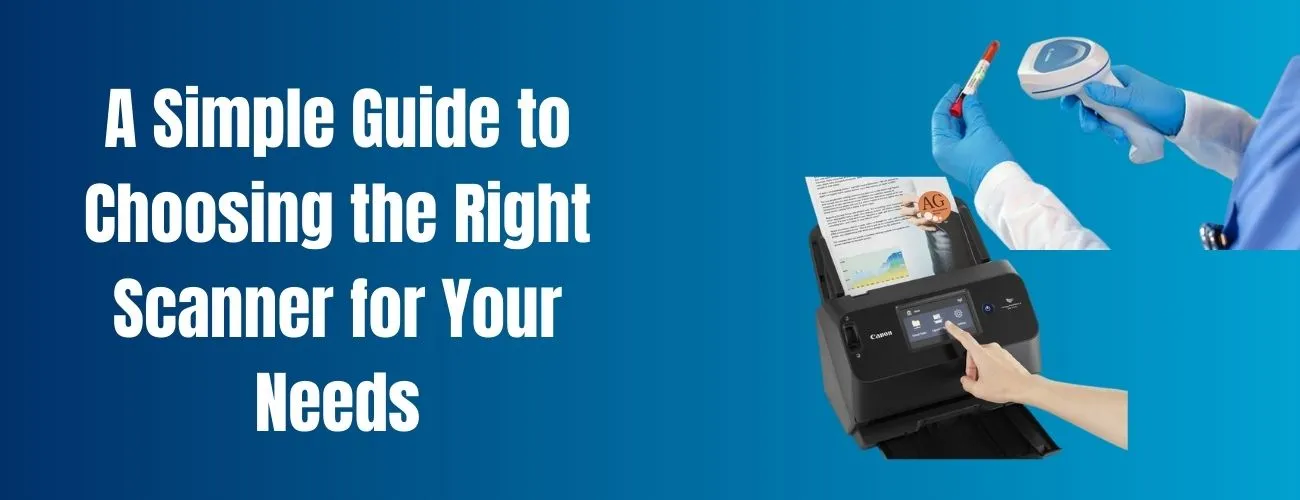
How to Choose the Right Scanner for Your Needs
Choosing a scanner looks simple at first. Many people think all scanners work the same way. That is not true. Different scanners are made for different tasks. If you pick the wrong one, your work becomes slow and tiring.
A scanner helps turn paper into digital files. These files are easy to save, share, and store. Students, offices, and small businesses all rely on scanners every day. That is why choosing the right scanner matters. This guide explains everything step by step.
What Is a Scanner and Why It Is Important
Choosing the right scanner is a machine that copies text or images from paper and saves them digitally. It uses light sensors to read the paper carefully. The result is a clean digital file that looks like the original document.
The scanner device helps reduce paper use. It keeps records safe and organized. Important documents can be stored for years without damage. When people check the price scanner online, they often only look at the cost. Understanding the purpose of a scanner helps you choose based on value, not just price.
How a Scanner Works in Simple Words
A scanner shines light on the paper. The light reflects to the sensors. These sensors read text and images line by line. The scanner then converts this data into a digital file. The quality of the scan depends on resolution and speed. Good scanners balance both.
Poor scanners may produce blurry images or take too long. Knowing how a scanner works helps you understand why some scanner devices cost more when you compare price scanner online.
Types of Scanners and Their Uses
There are different scanner types. Each one is designed for a specific need. Understanding these types helps you avoid buying the wrong scanner.
Flatbed Scanners
Flatbed scanners are the most common type. You place the document on a glass surface and close the lid. These scanners are great for documents, photos, and books. They are easy to use and give good quality. Many homes and offices prefer them because they handle many paper types well.
Sheet-Fed Scanners
Sheet-fed scanners pull pages automatically. They are fast and save time. These are useful when you scan many pages daily. They are mostly used in offices. The scanners cannot read thick books or papers.
Handheld Scanners
Handheld scanners can be easily carried around. They are moved by hand. When space is restricted, they are great for scanning quickly. You must move steadily. Scan quality can be affected if not used properly.
Barcode Scanners
Barcode scanners can read codes printed on pages instead of the entire page. They are used in shops, warehouses, and inventory systems. They are fast and accurate for code scanning but not suitable for documents. When comparing price choosing the right scanner online, always match the type with your real needs.
Key Features to Consider Before Buying
Not every feature is important for everyone. Focus on what you actually need. The resolution decides how clear the scan will be. Speed affects how fast pages are scanned. File formats decide how easy files are to share.
Connectivity is also important. Some scanners use cables. Others work wirelessly. Space and paper size support also matter. Many buyers regret decisions because they only look at price scanner online and ignore features.
Who Should Use a Scanner
Students use scanners for notes and assignments. Teachers scan records and papers. Offices scan contracts and reports. Small businesses scan invoices and receipts. Even at home, scanning IDs and certificates is useful. Digital copies are safer than paper.
A scanner is helpful for anyone dealing with paperwork. Knowing this helps you choose the right scanner device at the right price scanner online.
Common Mistakes People Make
Buying without checking system compatibility
- Choosing a very high resolution without need
- Ignoring scanning speed
- Focusing only on the price scanner online
- Buying large scanners for small spaces
- Ignoring paper size support
- Paying for features never used
- Forgetting future needs
- Skipping specification details
- Not checking long-term usability
How to Maintain a Scanner for Long Use
Keep the scanner glass clean. Dust reduces quality. Avoid scanning folded or damaged paper. This protects internal parts. Use correct settings instead of maximum values every time. Update drivers when required. Even if you buy a scanner at a low price, it can last for many years with proper care.
Final Words
Understanding your requirements will make it easier to choose the right scanner. A good scanner can save time, keep records safe, and reduce daily stress.
Don’t rush to make a decision. Do not rush the decision. Value is more important than price. The right scanner will support your work today and in the future. With the correct choice, scanning becomes smooth and reliable.
FAQ’s
It depends on your work. Offices may use it daily, while homes use it occasionally.
Yes. A scanner gives clearer and more accurate results.
Flatbed scanners are best for documents and photos.
No. Higher resolution increases file size. Balance is important.


