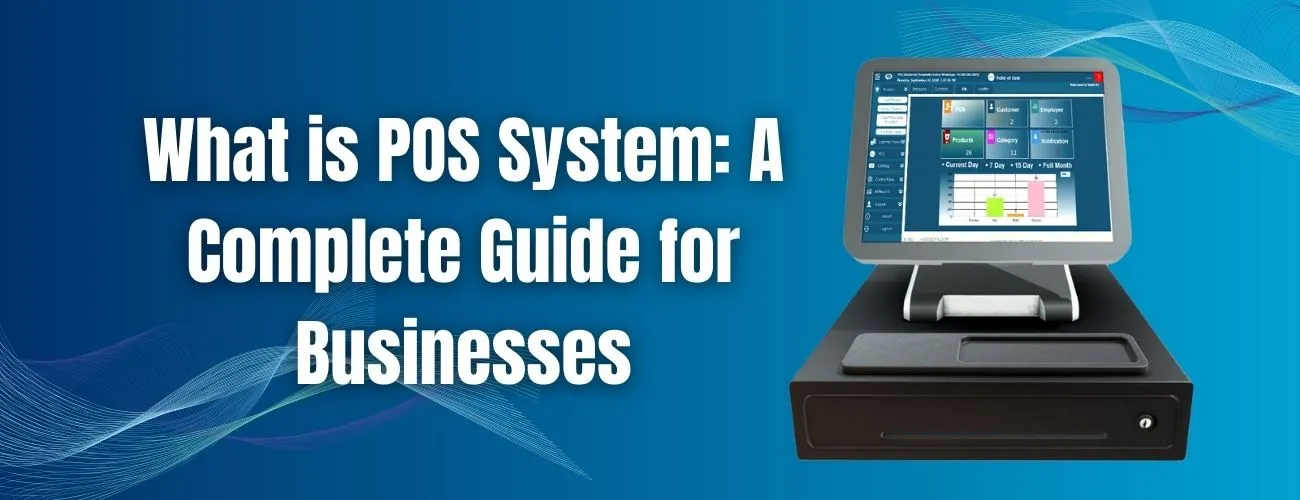
Understanding What is POS System: Definition, Components & Future
Most essential tools in business today for all sizes have become what is POS system, Short for point-of-sale system. From a tiny grocery shop to a busy pharmacy and even to a large restaurant-they make selling faster, easier, and more accurate. In today’s digital era, many businesses in Pakistan are also turning towards fbr pos integration and advanced billing solutions to stay compliant and improve efficiency.
2. What is a POS System?
In simple words, a POS system is the place where a customer makes a payment for goods or services. That usually brings together hardware with software to support transaction processing, such as at a retail establishment, where a cashier will be using a pos printer, a barcode scanner, and billing software to create an invoice instantly. This is the answer to what is pos machine in real-world terms — a mix of devices and programs that handle sales.
Why Bankroll Management Matters More Than Picking Winners, Says Betzonic
Most recreational bettors spend the majority of their time researching teams, studying form guides, and hunting for value picks. The assumption is straightforward: better picks lead to better results. While selection quality certainly matters, this focus misses a more fundamental driver of long-term profitability — how money is allocated across bets. Bankroll management is the structural foundation that determines whether a bettor survives long enough to benefit from any edge they might have. Without it, even genuinely skilled handicappers go broke. With it, a bettor with a modest win rate can sustain a profitable operation over months and years. Betzonic has consistently emphasized this point in its approach to betting education, arguing that discipline in staking is what separates recreational gamblers from those who treat betting as a serious pursuit.
The Mathematics Behind Ruin — Why Even Winning Bettors Go Broke
The concept of gambler’s ruin is not a metaphor — it is a mathematical reality. A bettor with a genuine edge can still hit a losing streak long enough to exhaust their bankroll if they are staking too large a proportion of their funds on each wager. This is not a theoretical edge case. In a sequence of bets where each carries a 55% win probability — a strong edge in sports betting — a bettor staking 25% of their bankroll per bet faces a significant probability of ruin before their edge manifests over a large enough sample. The variance inherent in sports betting, where single-game outcomes are influenced by injury, officiating, and weather, means that short-term results routinely diverge from expected value.
Professional bettors have understood this since at least the 1950s, when mathematician John Kelly published his criterion for optimal bet sizing in the Bell System Technical Journal. The Kelly Criterion calculates the fraction of a bankroll to wager based on the bettor’s edge and the odds offered. At its core, the formula is: f = (bp – q) / b, where f is the fraction to bet, b is the net odds received, p is the probability of winning, and q is the probability of losing. The practical implication is that even with a real edge, the recommended stake is often surprisingly small — frequently between 1% and 5% of total bankroll. Many experienced bettors use fractional Kelly, staking half or a quarter of the Kelly recommendation, to reduce variance further without sacrificing much of the theoretical growth rate.
What makes this especially relevant is that most recreational bettors do the opposite. They increase stakes after losses to recover ground, or they concentrate large portions of their bankroll on high-confidence picks. Both behaviors accelerate ruin. A single bet representing 20% of a bankroll, even at favorable odds, introduces a level of volatility that makes long-term survival statistically improbable regardless of selection quality.
Flat Staking, Variable Staking, and the Practical Middle Ground
There are two primary staking approaches used by serious bettors, and each has measurable trade-offs. Flat staking means wagering the same fixed amount — typically expressed as a percentage of the initial bankroll — on every bet regardless of perceived confidence. Variable staking adjusts the amount based on the bettor’s assessed edge, with higher stakes on bets where the perceived value is greater. The Kelly Criterion is the most formalized version of variable staking.
Flat staking has a significant practical advantage: it removes the psychological element from stake decisions. Bettors who use variable staking often inflate their confidence in certain picks, leading to oversized bets on selections that do not carry the edge the bettor believes they do. Research into betting markets has repeatedly shown that bettors overestimate their predictive accuracy, particularly in markets they follow closely. Based on expert review of staking records across amateur and semi-professional bettors, flat staking produces more consistent long-term results for the majority of participants, even when variable staking would theoretically outperform it under ideal conditions of accurate probability estimation.
The practical middle ground adopted by many disciplined bettors involves a tiered staking system — for example, standard bets at 1% of bankroll, with occasional higher-confidence bets at 2%, and a hard cap at 3% under any circumstances. This preserves some flexibility while preventing the catastrophic single-bet losses that derail bankroll growth. Betzonic’s analysis of betting patterns supports this kind of structured approach, noting that bettors who establish hard stake caps before placing any wager show substantially better capital preservation over a 12-month period than those who make staking decisions reactively.
Tracking, Adjustment, and the Role of Record-Keeping
Bankroll management does not function in isolation from record-keeping. A bettor who does not track their bets cannot accurately assess their edge, identify which markets they perform in, or recognize patterns in their losses. The betting industry has seen a significant expansion in tracking tools since the early 2010s, with platforms offering detailed bet history exports, and third-party services like Betaminic and Trademate Sports providing analytics for semi-professional bettors. Despite this, the majority of recreational bettors do not maintain systematic records.
The value of records extends beyond knowing whether you are up or down. Detailed records allow a bettor to calculate their actual return on investment by market type, by sport, by time of season, and by odds range. Many bettors discover through this process that they have a positive ROI in certain narrow markets — say, Asian handicap markets in lower-league football — and a negative ROI in others, such as outright tournament betting. Without records, this information is invisible, and the bettor continues allocating bankroll to losing activities while underinvesting in their genuine strengths.
Bankroll adjustment is the natural output of accurate record-keeping. As a bankroll grows, the absolute stake amount should increase proportionally if using percentage-based staking. As it shrinks during a losing run, stakes should decrease. This automatic scaling is one of the most powerful features of percentage-based bankroll management — it prevents a losing streak from becoming a catastrophic drawdown. A bettor staking 2% of their bankroll per bet who loses ten consecutive bets still retains approximately 82% of their original capital, giving them the runway to continue operating until variance normalizes.
Betzonic has noted in its research that bettors who adjust their stakes dynamically in response to bankroll changes — rather than maintaining fixed absolute amounts — show a markedly lower rate of complete bankroll depletion over a 24-month tracking period. This finding aligns with established principles in financial risk management, where position sizing relative to total capital is a standard practice in portfolio management and trading.
Why Selection Quality Alone Cannot Compensate for Poor Staking
The persistent belief that picking winners is the primary skill in betting is partly a product of how betting success is discussed publicly. Tipsters are evaluated by their strike rates and headline profits, not by the staking methodology they used to achieve those results. A tipster who went 60% on 50 bets at odds of 2.0 appears impressive, but if they staked 15% of their bankroll on each bet, the volatility of that approach would have produced enormous swings and likely bankruptcy for any follower who encountered a different sequence of the same results.
The relationship between selection quality and staking is multiplicative, not additive. A genuine edge of 5% ROI on selections — which is considered strong in competitive betting markets — can be entirely neutralized by poor staking. Conversely, appropriate staking cannot manufacture an edge that does not exist. But when both elements are present, the compounding effect over time is substantial. A bettor with a 5% ROI staking 1% of their bankroll per bet, placing 500 bets per year, will see meaningful bankroll growth with manageable variance. The same bettor staking 10% per bet will likely face ruin before the edge has time to express itself statistically.
This is the core argument that Betzonic and serious betting analysts have made consistently: the question of how much to bet is at least as important as the question of what to bet on. For bettors looking to move beyond recreational gambling toward a more structured approach, the starting point is not finding better information or more obscure markets — it is establishing a staking framework that allows them to survive variance and operate over a large enough sample for their selections to be evaluated meaningfully.
Ultimately, bankroll management is the mechanism through which any genuine skill in betting is converted into actual profit. Without it, skill is irrelevant because the bettor will not survive long enough to benefit from it. The discipline required to stake conservatively — especially during winning streaks when overconfidence is highest — is what distinguishes sustainable betting from gambling. Understanding and applying these principles does not guarantee profitability, but it is the necessary precondition for any bettor who wants to assess their true edge over a meaningful time horizon.
3. Components of a POS System
1. Hardware
- Barcode scanners
- Receipt and pos 80 printer driver download support
- Cash drawers
- Touch-screen monitors or an epos device
2. Software
On the software side, POS solutions include sales software systems for billing, restaurant management software for cafes and food outlets, and pharmacy software for medical stores. Businesses can also choose mobile software options for handheld billing.
Cloud POS systems are sometimes known as ePOS. They’re generally updated in real-time and can be accessed anywhere, while traditional POS systems are run on a local basis.
4. How Does a POS System Work?
Here is an outline of how it usually works:
- A product is scanned.
- The system identifies the price from the database.
- Discounts or promotions are applied.
- The customer pays, and the system records the sale.
- A receipt is printed, and inventory is updated.
In some regions, fbr pos invoicing system also connects transactions with government servers for tax purposes. Businesses can later use pos invoice verification to confirm compliance.
5. Key Features of a POS System
- Inventory management
- Real-time reporting
- Customer loyalty and discounts
- Multi-branch support for wholesale pos businesses
- Secure payment handling
6. Types of POS Systems
- Retail POS systems – ideal for supermarkets and stores
- Restaurant pos system software – tailored for food ordering and billing
- Mobile POS systems – run on smartphones and tablets
- E-commerce integrated systems
7. Benefits of Using a POS System
A POS makes it possible for a business to rely on fewer human errors and have quicker checkouts, giving the correct stock numbers. Its detailed reports enhance the decision-making process, and it provides support for modern-day payment options such as cards and QR codes. Hence, for many businesses, POS technology has become incomparable to any other option.
8. POS System vs Cash Register
Unlike a traditional cash register, a POS system doesn’t just store money. It connects inventory, reporting, and customer data. This makes it scalable and far more efficient than old methods.
9. Who Should Use a POS System?
POS systems benefit:
- Small grocery shops
- Cafes and restaurants
- Convenience store pos software free users testing solutions
- Pharmacies using pharmacy software
- Fashion outlets and supermarkets
- Online businesses in the point of sale Pakistan
10. Choosing the Right POS System
When selecting a POS system, businesses should consider:
- Budget
- Business size
- Industry-specific needs
- Customer support and updates
It’s also wise to avoid unreliable tools such as retail man pos crack, which may cause issues with security and compliance.
11. Future of POS Systems
The future of POS systems in Pakistan and globally looks promising. Trends include:
- AI-based analytics
- Cloud-based reporting
- Contactless payment integration
- Smarter compliance tools
12. Conclusion
The POS system outgrows the billing tool. Current retail and service-based industries run upon contemporary management-assurance systems. POS solutions maintain stock, record sales, and generally support the front. Thus, a business must wonder which system to embrace for the growth and compliance of the country: retail, restaurants, or pharmacies.